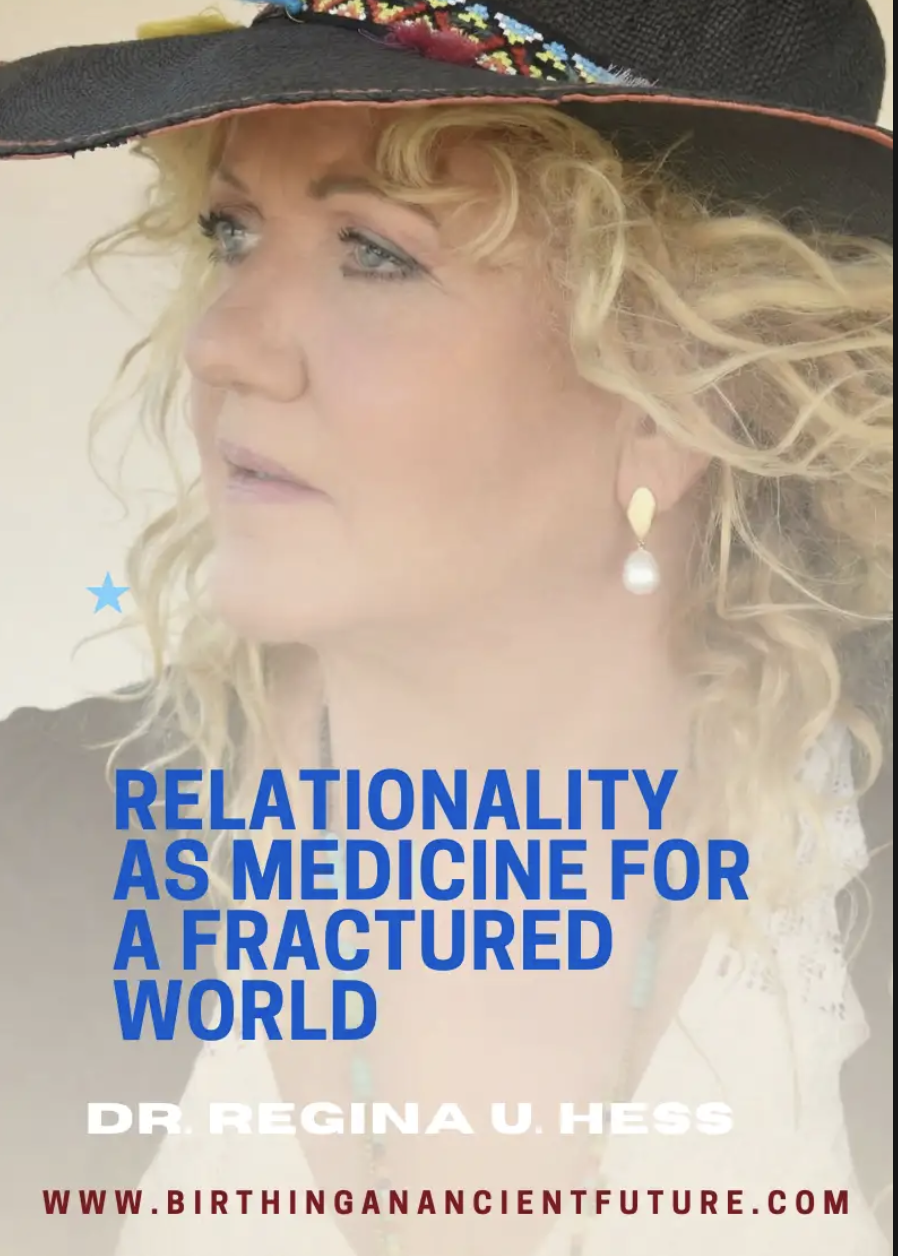
Relationality as Medicine: A Practical Map for Peace-Building in Complex Times
What if the most effective response to a fractured world is not another strategy, and a new relational capacity that can be trained and practiced?
Relationality becomes medicine when attention turns toward connection as a living practice that can be trained, strengthened, and carried into systems.
In this work, relationality is not only an interpersonal topic. It is a whole-person practice and a living-systems responsibility. It shapes how people lead, how organizations decide, how communities repair, and how futures are enacted.
This lens matters now because poly-meta-crises reveal weak points in relational architecture. They also reveal where new coherence can be built. Technological acceleration adds another layer: artificial intelligence and quantum computing amplify the field they enter. That makes relational ethics foundational.
Relationality as a trainable capacity
Relationality is the capacity to sense, track, and respond to relationship: within the self, between people, across history and culture, and with the more-than-human world.
It includes boundaries, repair, consent, and the ability to stay present with complexity. Relational fluency is developed as a meta-skill set that supports coherent leadership under pressure.
Turning poly-meta-crises into opportunity maps
A crisis reveals a relational need. The need might be clearer consent, safer pacing, better listening, stronger accountability, or more transparent decision-making.
Opportunity maps translate the rupture into a doable design move. This is peace-building as applied practice: not more force, and more contact, clarity, and structure.
A practice for this week: The Opportunity Map Turn
Step 1: Name the rupture in one sentence, without escalation language.
Step 2: Identify the relational need inside it. Examples: clearer consent, pacing, transparency, listening, repair pathways, accountability.
Step 3: Choose one design move that can be implemented this week. A consent check before decisions. A slower approval loop. A boundary agreement. A restorative conversation protocol. A meeting structure that protects listening.
Relationality as medicine is a commitment to dignity, coherence, and practical peace-building.
What becomes possible when the next step increases contact, not pressure?